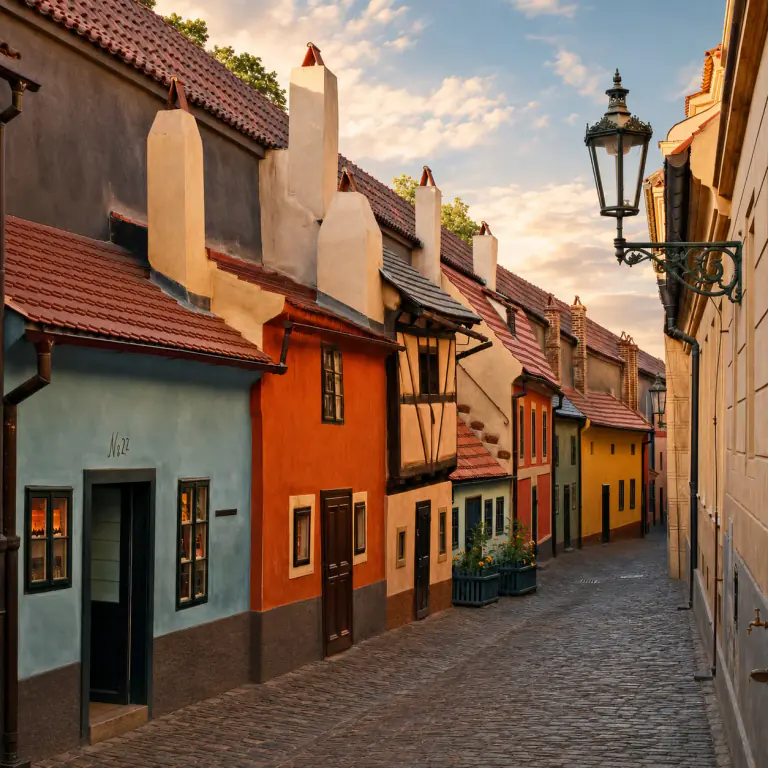
A castle at domestic scale
Golden Lane preserves a different kind of history from the surrounding palaces. Its modest homes housed marksmen and their families, craftspeople and goldsmiths. The street developed beside the northern defences, and its compact rooms show how people fitted daily life into a fortified royal residence.
Look beyond the colourful façades
House No. 13 evokes a Renaissance gunner’s home. No. 12 recalls film collector Josef Kazda, who protected Czechoslovak films during the Nazi occupation. The present colours also have a history: artist Jiří Trnka prepared designs for the façades in the 1950s. The last residents left in 1953.
Kafka’s address
Franz Kafka worked in house No. 22 in 1916–17. This connection is worth distinguishing from the lane’s romantic reputation: the street’s appeal lies as much in its documented residents as in stories of secret experiments and gold-making. Treat those stories as folklore, not as evidence that these houses were imperial laboratories.
A detail worth noticing
Compare the doorways, windows and rooflines before entering the houses. Their small scale makes the contrast with the Cathedral especially clear. Read the room displays as individual lives rather than rushing through the lane as a single photo stop.